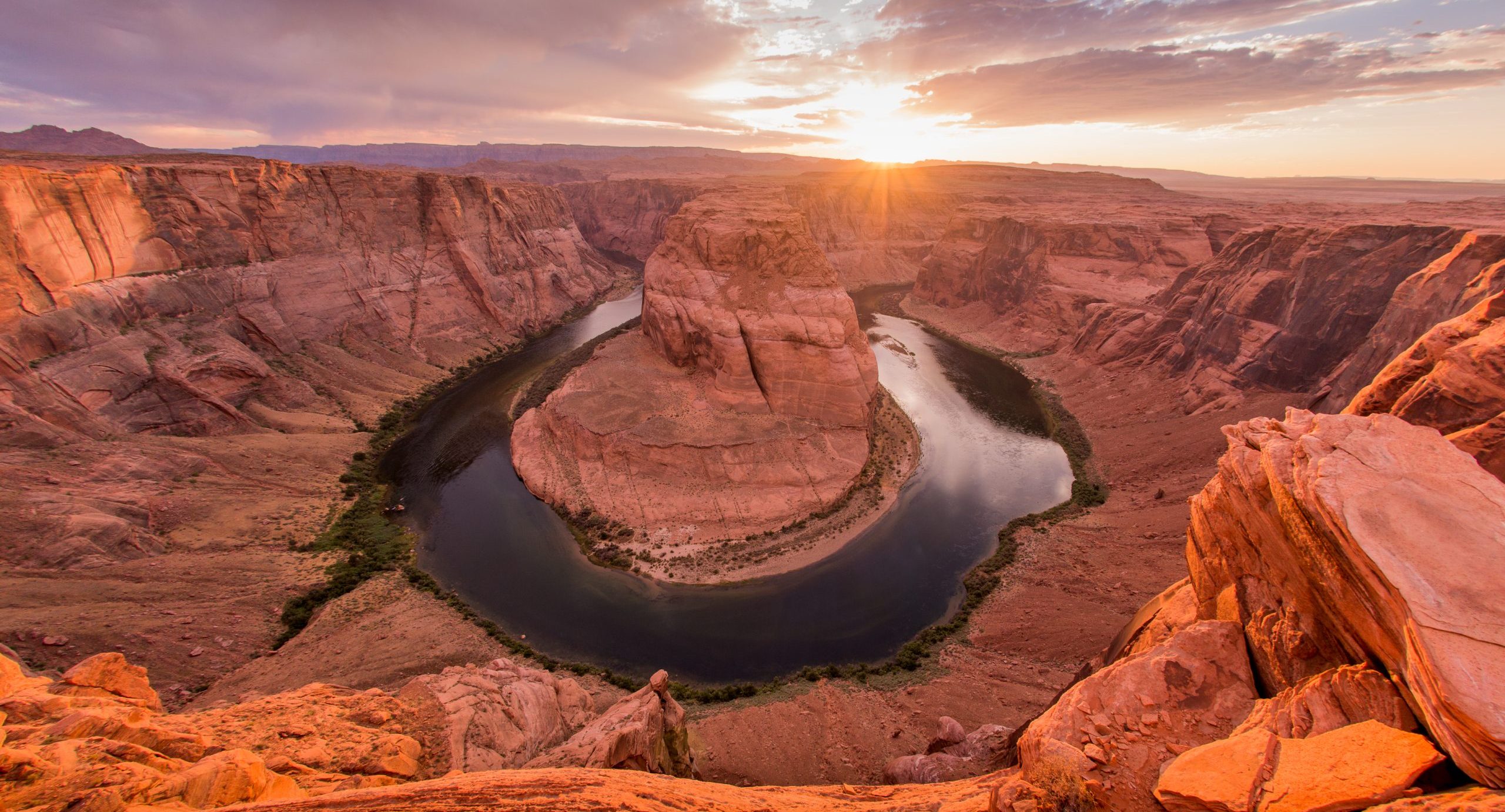
Few landscapes are as instantly recognizable as Horseshoe Bend. Just outside Page, Arizona, the Colorado River makes a sweeping 270-degree turn beneath towering sandstone cliffs, creating one of the Southwest's most dramatic viewpoints.
It is also one of the region's most popular attractions. Choosing the right season and time of day can mean the difference between quietly watching the canyon wake up and searching for space among hundreds of sunset visitors.
When is the best time to visit Horseshoe Bend?
For the best combination of pleasant weather and manageable crowds, visit in October or early November. Fall at Glen Canyon is generally mild and provides a welcome break from the summer heat and peak-season crowds, according to the National Park Service.
Spring can also be beautiful, particularly in March and April, but it tends to be windier and busier with Southwest road-trippers. Summer brings long days and predictable travel conditions, but it is also one of the hottest and busiest times of year.
The short answer:
- Best overall: October through early November
- Fewest crowds: December through February, outside holiday periods
- Best time of day for fewer people: The first hour after sunrise
- Best time for sunset photography: About 60 to 90 minutes before sunset
- Worst combination of heat and crowds: Summer afternoons and holiday weekends
What is the best time of year to avoid crowds?
Winter is generally the quietest season at Horseshoe Bend. For the greatest chance of a peaceful visit, plan a weekday trip in January or February.
Daytime conditions can be comfortable when the sun is out, but mornings are often cold and nighttime temperatures may fall below freezing. Page occasionally receives snow, so check the forecast and bring warm layers.
December can also be quiet, although traffic may increase around Christmas and New Year's. Late November and early March are good compromises if you want lighter crowds without the coldest winter conditions.
If complete solitude is your goal, keep your expectations realistic. Horseshoe Bend is one of Glen Canyon National Recreation Area's most visited and photographed locations. Even during winter, you are unlikely to have the overlook entirely to yourself.
Is sunrise or sunset better?
Sunrise is best for avoiding crowds
Sunrise is the best choice if avoiding crowds matters more than anything else. Arrive when the parking area opens and walk directly to the overlook. The trail and viewpoint are typically calmer before tour groups and day-trippers begin arriving.
Morning temperatures are also safer and more comfortable during the warmer months. Photographers may find parts of the canyon and river in shadow, but the softer light can bring out the warm colors of the surrounding sandstone.
Sunset has the best atmosphere and the biggest crowds
Sunset is Horseshoe Bend's most popular time of day. The sky can be spectacular, but the sun is generally in front of the overlook. This produces strong backlighting and deep shadows inside the canyon. The result can be dramatic, although it makes photography more challenging.
Arrive at least 60 to 90 minutes before sunset if you want enough time to park, hike, and find a good viewing position. Expect the overlook to be busiest during the final hour of daylight, especially on Fridays, Saturdays, holidays, and summer evenings.
Do not wait until the sun is already setting to enter. The site is officially open from sunrise to sunset, and operating times change throughout the year. Visit Page recommends confirming current hours before your trip.
Midday offers better canyon light but harsher conditions
When the sun is high, more light reaches into the canyon and onto the Colorado River. That can make midday surprisingly useful for photography.
The tradeoff is heat. The trail has very little shade, and summer temperatures in Glen Canyon can become dangerously high. If you visit between late May and September, avoid the hottest portion of the afternoon.
What is Horseshoe Bend like during each season?
Spring
March through May offers moderate temperatures and longer daylight hours. It is an appealing season for a larger Arizona or Utah road trip, so visitor numbers begin increasing.
Spring weather in Glen Canyon can be unpredictable, with extended periods of strong wind. Secure hats and loose belongings, and be especially careful near unprotected sections of the rim.
Summer
June through August is a popular period despite the extreme heat. The National Park Service warns that summer temperatures around Glen Canyon can exceed 110°F, and most of the Horseshoe Bend trail is exposed. Summer crowding is also common at overlooks and parking areas.
National Park Service guidance recommends carrying plenty of water and scheduling outdoor activity during the coolest part of the day.
Arizona's monsoon season also brings the risk of sudden thunderstorms, high winds, lightning, and heavy rain, typically from mid-June through September. Horseshoe Bend is an exposed overlook, so return to your vehicle immediately if you hear thunder.
If summer is your only option, visit at sunrise.
Fall
Late September through early November offers some of the year's most comfortable conditions. Temperatures begin to moderate, summer vacation traffic declines, and the days remain long enough for sightseeing.
October is arguably the best single month to visit. It is not crowd-free, particularly at sunset, but a weekday morning can feel noticeably calmer than a summer visit.
Winter
December through February brings the lightest crowds. Days are shorter, mornings can be very cold, and occasional winter weather may affect roads or trail conditions.
In exchange, parking is easier and the viewpoint feels less hectic. Winter is the strongest choice for visitors who prioritize space and solitude over warm weather.